Reflect
Not One or the Other
2 months ago
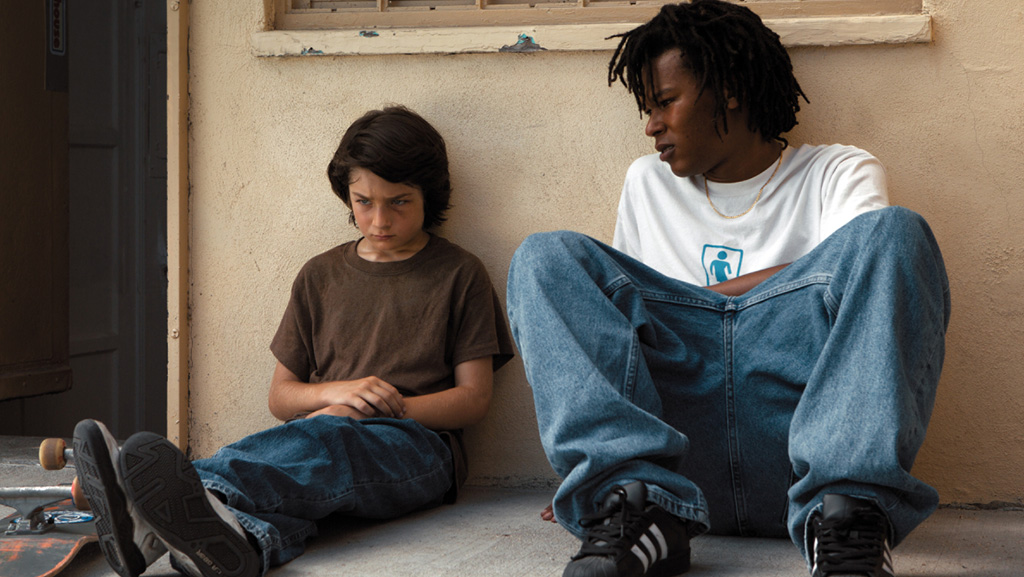
Happiness and pain are always both there.
The more fortunate people are, the happier they seem.
The word “seem” is the difficult part. We can only see what is visible from the outside, so that is how they appear to us. Good relationships, a home that everyone envies, plenty of free time, and enough money to live without worry. When we put them together, they certainly look like the ingredients of happiness.
But it seems that even people who have all these things are not happy all the time.
Research on money and happiness tells a similar story.
In 2010, Daniel Kahneman and Angus Deaton reported that happiness reached a plateau once annual income exceeded about $75,000. Later, Matthew Killingsworth challenged this finding, arguing that there was no such plateau.
In 2023, Kahneman and Killingsworth, together with Barbara Mellers, reconsidered the issue through a joint study known as an “adversarial collaboration.” They reached a revised conclusion.
For most people, happiness continues to increase as income rises. A plateau appears only among a small group of people who are already unhappy. Moreover, what the earlier study had identified as a “happiness plateau” was not really about happiness. It was measuring the way unhappiness gradually fades.
Money can keep unhappiness away to a certain degree. But that does not necessarily mean that it brings happiness itself.
Happiness and unhappiness do not seem to be opposite ends of the same scale.
This overlaps, in some way, with something I have felt for a long time.
Even when people are fortunate, pain does not disappear. Even when they are not fortunate, happiness can still begin to grow.
Wherever we are, something is missing in a way that belongs to that particular place. From the outside, we can see only the happiness that is visible. The pain that exists beside it on the inside usually cannot be seen.
There is probably no one who lives by choosing either happiness or pain.
Both are always there.
Wealth may change the balance between happiness and pain a little, but it cannot completely remove either one.
If that is true, envying someone may have less meaning than we think.
No matter where we are born or what kind of environment we grow up in, both happiness and pain come with us. The balance may be different, but there is no life that contains only one of them.
When we envy someone, we see only the side of their life that is visible to us. We cannot see the pain that must exist beside it.
We are comparing ourselves with them while leaving out the half that we cannot see.
From the beginning, such a comparison does not really work.
References
Kahneman, D. & Deaton, A. (2010) https://doi.org/10.1073/pnas.1011492107
Killingsworth, M. A. (2021) https://doi.org/10.1073/pnas.2016976118
Killingsworth, M. A., Kahneman, D. & Mellers, B. (2023) https://doi.org/10.1073/pnas.2208661120
A single essay, chosen at random. Reload to see another.